
Automatic vs Manual Gearbox Explained: Which Transmission is Best for You?

Confused Between AMT, CVT, DCT and Torque Converter? Here's the Simple Guide Every Car Buyer Should Read
Buying a new car today is much more confusing than it was a few years ago.
Earlier, you had only two choices: Manual or Automatic. Today, car brochures are filled with terms like AMT, CVT, DCT, iMT, and Torque Converter. Most buyers simply ask, "Bhai, automatic hai kya?" without understanding what is actually inside the car.
But here's the truth:
The type of gearbox can completely change your driving experience, fuel efficiency, maintenance cost, and even long-term ownership satisfaction.
Let's understand every gearbox in the simplest possible way.
What Does a Gearbox Actually Do?
Think of a gearbox as the middleman between the engine and the wheels.
Its job is simple:
Increase power while climbing hills.
Save fuel while cruising.
Help the car accelerate smoothly.
Keep the engine running efficiently.
Without a gearbox, your car would either be too slow or too inefficient.
Types of Gearboxes Available in India
1. Manual Transmission (MT)
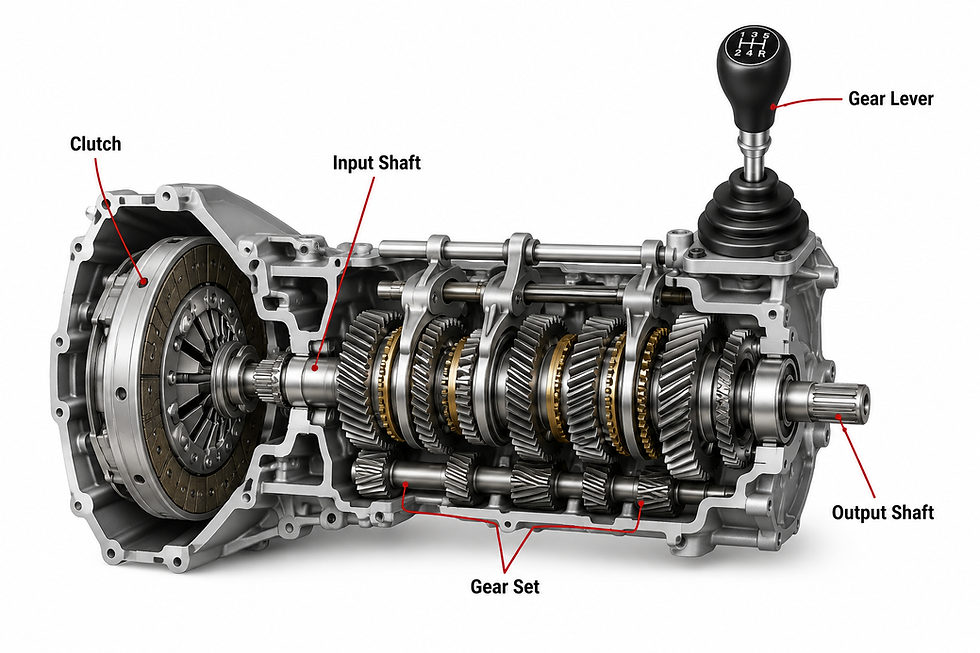
You press the clutch and manually change gears using the gear lever.
The engine and wheels are connected through a clutch plate that you control yourself.
Pros
Cheapest to buy
Best fuel efficiency in most cases
Lower maintenance cost
More control while driving
Preferred for hilly areas
Cons
Tired in city traffic
Requires driving skill
Not ideal for beginners
Maintenance Cost
Clutch replacement: ₹8,000-₹20,000 depending on the car.
Best For
Highway users
Driving enthusiasts
Budget-conscious buyers
People driving more than 100 km daily
2. AMT (Automated Manual Transmission)

An AMT is basically a manual gearbox where a computer changes gears automatically.
It still has a clutch, but you don't operate it.
Think of it as:
Manual gearbox + robot.
Pros
Cheapest automatic transmission
Excellent mileage
Low maintenance
Easy to drive in traffic
Cons
Gear shifts feel jerky
Slow acceleration
Not very sporty
Rolling back on slopes in older cars
Maintenance Cost
Almost similar to a manual transmission.
Best For
City driving
First-time automatic buyers
Budget buyers
Taxi operators
3. CVT (Continuously Variable Transmission)

A CVT doesn't have traditional gears.
Instead, it uses two pulleys and a steel belt to provide infinite gear ratios.
This is why CVT cars feel extremely smooth.
Pros
Smoothest driving experience
Great in city traffic
Comfortable for families
Good fuel efficiency
Cons
Rubber-band effect during acceleration
Not exciting to drive
Expensive repairs
Doesn't suit aggressive drivers
Maintenance Cost
CVT oil replacement: ₹5,000-₹10,000.
Major repairs can be expensive.
Best For
Family buyers
Daily city commuters
Senior citizens
Comfortable driving lovers
4. Torque Converter Automatic (AT)
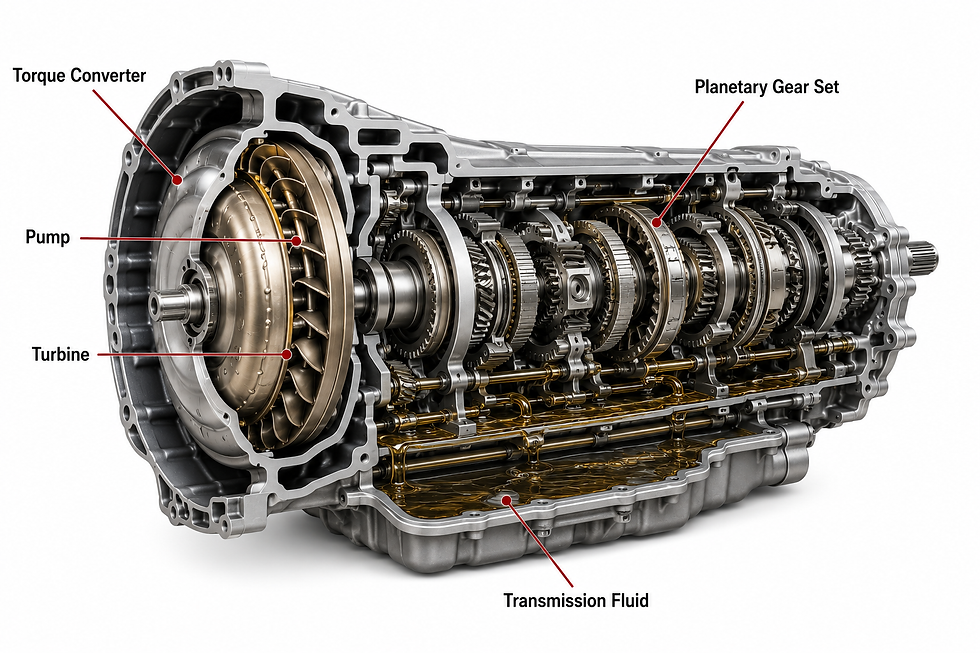
Instead of a clutch, it uses a fluid coupling called a torque converter.
The transmission changes gears smoothly using hydraulic pressure.
Pros
Very reliable
Smooth gear shifts
Great for city and highways
Handles high-torque engines well
Cons
Slightly lower mileage
More expensive than AMT
Repair costs can be high
Maintenance Cost
Transmission oil change: ₹6,000-₹15,000.
Best For
Long-term ownership
Family buyers
Highway users
SUV buyers
5. DCT or DSG (Dual Clutch Transmission)
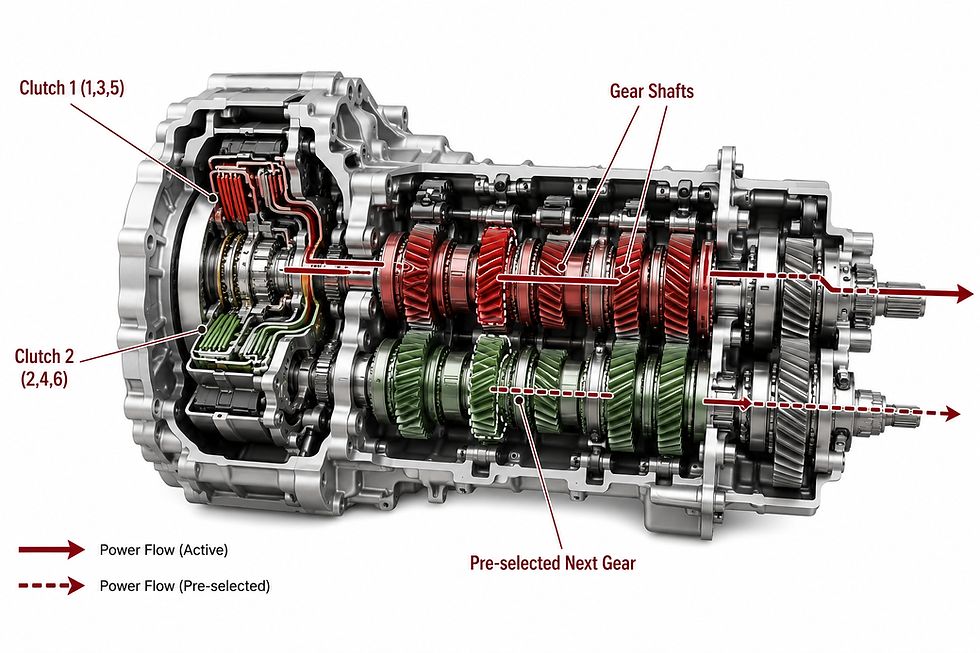
A DCT uses two clutches.
One clutch handles odd gears (1,3,5).
The other handles even gears (2,4,6).
This allows the next gear to be ready before you shift, resulting in lightning-fast gear changes.
Pros
Fastest gear shifts
Sporty driving experience
Excellent performance
Better fuel efficiency than traditional automatics
Cons
Expensive to repair
Can overheat in heavy traffic
Jerky at low speeds in some cars
Higher maintenance cost
Maintenance Cost
Repairs can exceed ₹1 lakh in premium vehicles.
Best For
Enthusiasts
Performance lovers
Highway driving
Premium car buyers
6. iMT (Intelligent Manual Transmission)

You change gears manually, but there is no clutch pedal.
Sensors automatically operate the clutch for you.
Prox
Fun to drive
Easier than manual
Less tiring in traffic
Cons
Limited model availability
Not as convenient as a true automatic
Best For
People moving from manual to automatic
Drivers who enjoy changing gears
Let's compare the earboxes in terms of mileage, comfort, performance, maintenance, and reliability
Gearbox | Mileage | Comfort | Performance | Maintenance | Reliability |
Manual | ⭐⭐⭐⭐⭐ | ⭐⭐ | ⭐⭐⭐⭐ | ⭐⭐⭐⭐⭐ | ⭐⭐⭐⭐⭐ |
AMT | ⭐⭐⭐⭐⭐ | ⭐⭐⭐ | ⭐⭐ | ⭐⭐⭐⭐ | ⭐⭐⭐⭐ |
CVT | ⭐⭐⭐⭐ | ⭐⭐⭐⭐⭐ | ⭐⭐ | ⭐⭐⭐ | ⭐⭐⭐⭐ |
Torque Converter | ⭐⭐⭐⭐ | ⭐⭐⭐⭐ | ⭐⭐⭐⭐ | ⭐⭐⭐ | ⭐⭐⭐⭐⭐ |
DCT | ⭐⭐⭐⭐ | ⭐⭐⭐⭐ | ⭐⭐⭐⭐⭐ | ⭐⭐ | ⭐⭐⭐ |
iMT | ⭐⭐⭐⭐ | ⭐⭐⭐ | ⭐⭐⭐ | ⭐⭐⭐⭐ | ⭐⭐⭐⭐ |
Which Gearbox Should You Buy?
If your daily commute is 90% city traffic:
CVT or AMT
If you drive 100 km every day:
Manual
If you want peace of mind for 10 years:
Torque Converter
If you love driving:
DCT
If you want the cheapest automatic:
AMT
If your family will also drive the car:
CVT
🏆 The Ultimate Winner
There is no single winner because every buyer has different needs.
But for most Indian buyers, here's the ranking:
Torque Converter Automatic – Best balance of reliability, comfort and performance.
CVT – Best for city driving and family use.
Manual Transmission – Best for mileage and low ownership cost.
DCT – Best for enthusiasts.
AMT – Best budget automatic.
AutoInsides Expert Take
The gearbox is something you'll live with every single day. Engine power and features may impress you in the showroom, but the transmission decides whether you'll enjoy driving your car for the next 8-10 years.
So before buying your next car, don't just ask:
"Kitna mileage deti hai?"
Also ask:
"Which gearbox does it have, and does it suit my driving style?"
Because choosing the right gearbox can make the difference between loving your car and regretting your purchase.
Which gearbox are you using right now, and would you buy the same transmission again? Let us know in the comments below.


Comments